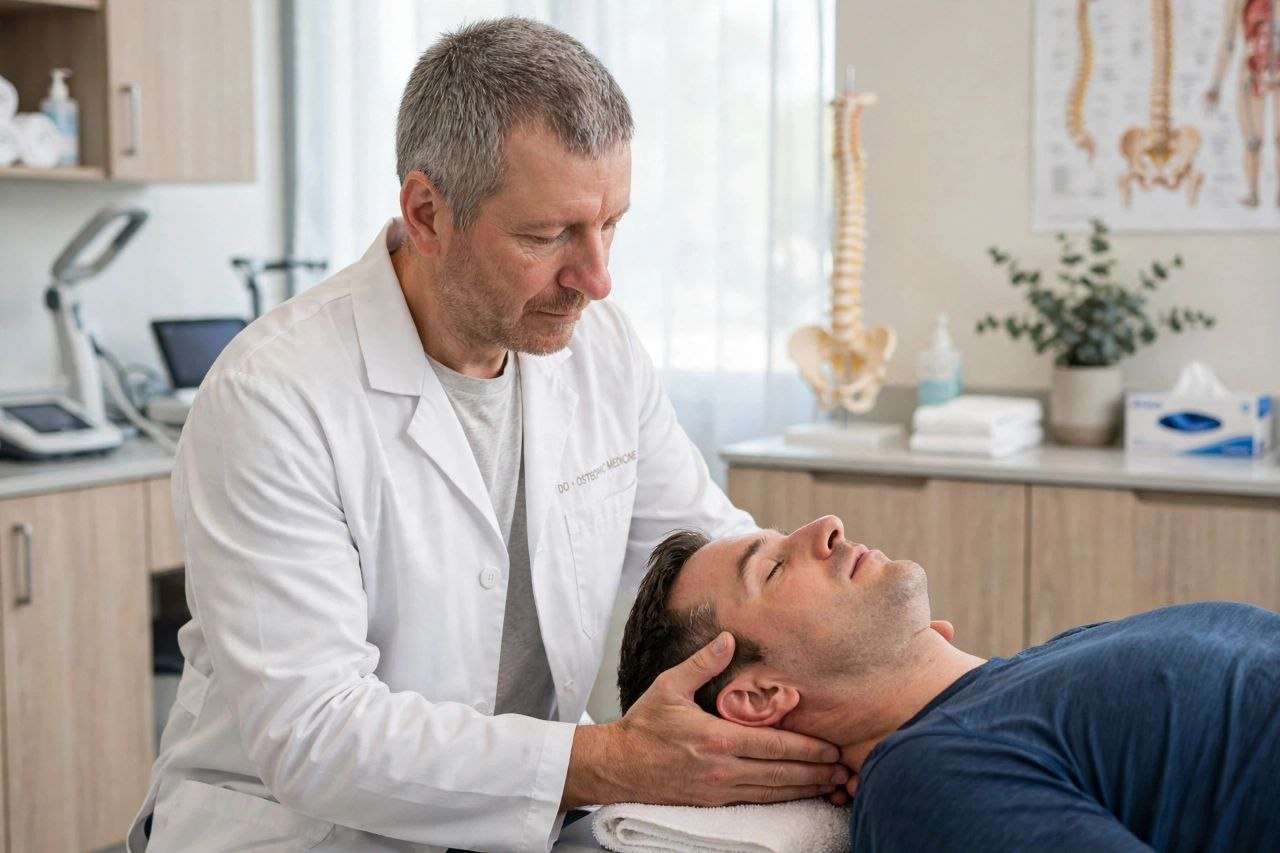
> Andrey Dobrikov — Osteopathic Physician and Psychologist
Osteopathic physician · Manual therapist · Psychologist

Restoring freedom to the body,
and calm to the mind.

Gentle work with body and mind, aimed at restoring natural balance.

In-person appointments and online consultations are available. Write from any country and we will identify the most suitable format together.

Andrey Dobrikov
Where to start? →

Osteopathy

An individual approach to the body, movement and recovery.

Osteopathic and manual therapy: what patients should knowRead article

A responsible consultation begins with history taking, examination and screening for warning signs. The practitioner should explain the likely mechanisms, expected benefits, limitations and alternatives before treatment begins.

Common approaches include joint mobilisation, soft-tissue work, myofascial techniques, muscle-energy techniques and carefully selected manipulation. Choice and intensity should reflect the diagnosis, age, bone health, neurological findings and the patient’s preferences.

The most useful plan usually combines appropriate hands-on care with movement, graded exercise and self-management. Progress should be judged by function—sleep, walking, work and daily activity—not only by temporary changes in tenderness.

This material is educational and does not replace individual assessment by a physician or psychotherapist.

Gentle manual therapyRead article

Gentle work may be appropriate for people with long-standing pain, fear of movement, increased sensitivity or recovery after illness. Gentle does not mean suitable for everyone; diagnosis and risk assessment remain necessary.

Short-term relief can reflect changes in nervous-system sensitivity, protective muscle tone and confidence in movement. Claims about permanently reshaping fascia or mechanically breaking adhesions in one session are oversimplified.

A good session creates an opportunity for active recovery. Comfortable movement, walking, breathing exercises or graded strengthening help consolidate functional improvement.

This material is educational and does not replace individual assessment by a physician or psychotherapist.

Musculoskeletal symptoms and internal organsRead article

Signals from internal organs and musculoskeletal tissues can converge within the nervous system, so discomfort may sometimes be felt in the back, shoulder, chest or pelvis.

New chest pain, severe abdominal pain, fainting, fever, unexplained weight loss, bleeding or rapidly worsening symptoms require medical assessment. Manual treatment should never delay appropriate investigation.

Evidence for so-called visceral manipulation remains limited. The clinically useful approach is broad assessment and timely referral, not a universal visceral explanation for every symptom.

This material is educational and does not replace individual assessment by a physician or psychotherapist.

Lifestyle and musculoskeletal healthRead article

There is no single perfect posture. Changing position regularly, building strength gradually and maintaining tolerable aerobic activity are usually more useful than trying to hold one rigid alignment.

Strength training becomes especially important with age, while sleep and recovery influence pain sensitivity and exercise tolerance. Programmes should be adapted for heart disease, osteoporosis, surgery and other relevant conditions.

Prevention is not a guarantee against illness. Its purpose is to increase resilience, preserve function and help people notice problems early.

This material is educational and does not replace individual assessment by a physician or psychotherapist.

Stress, tension and painRead article

During prolonged stress, breathing, sleep, muscle activity and attention to bodily sensations can change. Pain itself then becomes another stressor and may create a self-reinforcing cycle.

After urgent causes have been excluded, a combined plan can include graded activity, sleep support, relaxation, psychological work and appropriately selected manual care.

The goal is not to remain calm at all times. It is to improve the body’s ability to move between mobilisation and recovery and to restore meaningful daily activity.

This material is educational and does not replace individual assessment by a physician or psychotherapist.

Ask about osteopathy

Use the booking form below to briefly describe your concern and provide a preferred contact method.

Go to booking and contact

Psychotherapy

A calm space for conversation, self-understanding and finding solutions.

Psychosomatics without mythsRead article

Pain, palpitations, dizziness, fatigue and digestive symptoms can be real even when initial tests do not provide a complete structural explanation. Medical causes still need appropriate assessment.

Stress and anxiety can influence breathing, heart rate, intestinal activity, muscle tone, sleep and attention to sensations. Fear and repeated checking may then maintain a symptom cycle.

Psychotherapy can complement medical care by addressing catastrophic interpretations, avoidance, helplessness, emotional regulation and relationships. It should never be used to dismiss physical symptoms.

This material is educational and does not replace individual assessment by a physician or psychotherapist.

Personal direction and self-realisationRead article

Wellbeing often grows when daily choices reflect personal values, develop competence and support meaningful relationships. Different life stages may require different priorities.

Useful exploration combines reflection with small experiments: a course, a conversation, volunteering, creative work or a limited trial of a new role.

External limitations are real. The aim is not to blame the individual, but to identify the realistic area of choice that remains available.

This material is educational and does not replace individual assessment by a physician or psychotherapist.

Family wellbeing and reconnectionRead article

A constructive conversation describes a specific event, names its effect and makes a clear request. Listening does not require agreement, but it does require an attempt to understand.

Repeated criticism and withdrawal can form a cycle in which both partners feel unsafe. Therapy focuses on changing the cycle rather than identifying a single guilty person.

When coercion, fear or violence is present, safety comes first. Joint sessions are not appropriate in every situation.

This material is educational and does not replace individual assessment by a physician or psychotherapist.

Parents and children: finding a shared languageRead article

Adults can first reflect the child’s feeling and then discuss rules or solutions. This helps the child feel heard without removing parental responsibility.

Rules work better when they are concrete, predictable and explained. Adolescents should increasingly participate in deciding how agreed goals will be achieved.

If a child becomes markedly withdrawn, stops sleeping, speaks about self-harm or shows a sudden decline in functioning, professional assessment is important.

This material is educational and does not replace individual assessment by a physician or psychotherapist.

Post-traumatic stressRead article

Intrusive memories, nightmares, avoidance, emotional numbing and hypervigilance can occur after trauma. Diagnosis depends on the pattern, duration and effect on daily life.

Evidence-based treatments include trauma-focused cognitive approaches, exposure-based methods and EMDR. Preparation, consent, pacing and safety planning are essential.

Recovery does not erase memory. It helps the event become part of the past so that sleep, relationships, work and planning can return.

This material is educational and does not replace individual assessment by a physician or psychotherapist.

Ask about psychotherapy

Use the booking form below to briefly describe your concern and provide a preferred contact method.

Go to booking and contact

Booking and contact

Choose a convenient contact method or leave one short request.

Contact the doctor wherever you are

You may contact the doctor from any country. Briefly describe your concern and choose a convenient contact method: WhatsApp, Telegram or MAX. The doctor will review your message and suggest the best place to start.